
Posted by Nathan Sheffer on Mar 26, 2019
Developmental Disabilities Awareness Month
March is National Developmental Disabilities Awareness Month. To help raise awareness for Developmental Disabilities (DD), we will talk about the prevalence of DDs, incontinence
Developmental Disabilities (DD) are a complex collection of 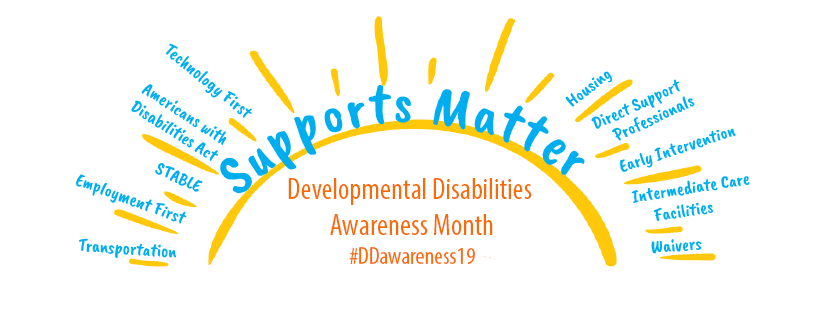 conditions and disorders that cause intellectual disabilities, speech disorders, physical impairments, and medical conditions. According to the CDC (Center for Disease Control), approximately 16% of all children in the U.S. have a developmental disability. In addition, the prevalence of DD is increasing over time, with a 17% increase over the last decade. It is important for new parents and soon to be parents to understand the risks of DD, so they can take appropriate steps to reduce the risk of their child developing a DD and prepare to care for a child with DD.
Just Like You
Check out this video celebrating Developmental Disabilities Awareness Month
Incontinence and Developmental Disabilities
Incontinence is more common in children with DD than in typically developing children. Incontinence can be due to a variety of reasons for children with DD. Often, incontinence is a result of signal interference from the brain to the bladder, or bladder to the brain, informing of the need to urinate or a bowel movement. Common developmental disabilities with a risk of incontinence include:
- Spina Bifida
- Cerebral palsy
- Autism
- Down Syndrome
- Angelman’s syndrome
- And others
Incontinence is a very challenging condition for the affected individual and their family/caregiver no matter what age or what other conditions the person may have. With adults and children with DD, the challenges can be even more difficult due to the disability, extra medical care, adapting to parenting a child with DD, assimilating the child in school and the community, and much more. When incontinence is not managed properly and you must deal with many
How Tranquility Product Family Can Help
At Tranquility, we manufacture multiple youth sized diapers for children who grow out of traditional baby diapers. The gap between baby diapers and adult diapers can be very difficult, and the right youth diaper can have a huge impact! We also offer a full range of adult diapers for adults with DD. With both pull-on style and tape-tab diaper style products, we have multiple
Shop our Youth Diapers and Adult Diapers today to learn more about our products. Or give us a call and we’d be happy to help you find the best products for your child or an adult with DD.
The Most Common Developmental Disabilities
Some of the most common developmental disabilities
With advancements in medicine, technology, and policy, families and children with DD have more information, resources, and support than ever before. Children and adults with DD are embraced by communities and schools, and resources like assistive technology and parent groups